Beginner’s Guide to Medical Alert Systems
Medical alert systems can help to provide peace of mind to seniors and their families by providing a simple, quick way to contact medical assistance when emergency help is needed, such as medical, fire or police. Below is an overview of medical alert system.
Who should have one?
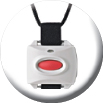 Medical alert system are important for those at risk of falls or a stroke, as well as people with medical conditions that would necessitate a need such as amyotrophic lateral sclerosis (ALS), arthritis, balance disabilities, communication disabilities, deafness, hearing loss, multiple sclerosis, quadriplegia, seizures, speech disabilities and spinal cord injury (SCI).
How do they work?
Usually there are only three components to a medical alert system: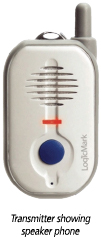
- A small radio transmitter (a light-weight, battery-powered “help” button that can be carried on a belt or in a pocket, or worn by the user on a chain around the neck or on a wrist band)
- A console connecting to the user’s telephone
- An emergency response center that monitors these types of calls
Most medical alert systems operate by having a user press the transmitter’s “help” button, sending aradio signal to the console (connected to the user’s telephone). This causes the console to automatically dial one or more pre-selected emergency telephone numbers. When an emergency response center is contacted, the caller is identified through speakerphone on the transmitter or console, allowing the center to:
- Determine the nature of the emergency
- Review the caller’s medical history
- Notify the appropriate medical professionals and/or family/caregiver
If the center can not contact the caller or determine whether an actual emergency exists, they will notify emergency providers to go to the caller’s home, monitoring the situation until the problem is resolved.
Who will be notified in an emergency?
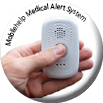 If a monitoring service is used, the base unit will call the monitoring service. If the equipment is used without a monitoring service, the base unit can be programmed to call one or more specific telephone numbers in a pre-selected order. These numbers can include 911, a neighbor or relative, or a doctor’s office. If no one on the contact list can be reached, emergency services in the person’s area will be dispatched.
Can medical alert systems work outside of the home?
Most medical alert systems have a range of 200 to 400 feet outside. There are also medical alert systems on the market that operate with GPS, so a user can press the “help” button whether he or she is home or away, and emergency personnel can locate the person.
What happens if a user is unable to press the “help” button but is in an emergency situation?
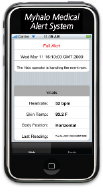 There are medical alert systems on the market that operate without the use of a “help” button. The wearable devices are equipped with fall detection technology—using solid state accelerometer sensors and proprietary, low power, advanced motion signal processing techniques.
How much do medical alert systems cost?
The device can be purchased, rented, or leased. The purchase prices normally range from $200 to more than $1500. There may also be a small installation fee, and a monthly monitoring charge that can range anywhere from $10 to $50. Devices can also be rented for $15 to $50 per month, which usually includes the monitoring service.
Are medical alert systems covered by Medicare, Medicaid or insurance companies?
Usually not, but if the user has a prescription for a medical alarm, payment arrangements might be made between the user and the company providing his or her health insurance. Sometimes a health insurance company will reimburse the user after he or she initially pays the total cost upfront.
What other features do medical alert systems offer?
Many of the systems include daily reminder notifications regarding medications and appointments, smoke or carbon monoxide detectors or household temperature monitors. Some systems also offer several benefits for users who have different disabilities, like hearing impairment, visual impairment, and those who have mobility challenges. Some of these features include handsets that are hearing aid compatible, flashing keypad for incoming calls, oversized keypad numbers and hands-free capability.
NOTE: When you are ready to begin comparison shopping for a medical alert system, use CareWorks Health Services’ comparison shopping guide to mark down all of the features, pricing and information for each system that you research.
Call CareWorks Health Services today to schedule a free in-home care needs assessment, and we will make certain that any available technology for safely aging at home, wherever home is, is explored.