Lighting Considerations for Persons With Low Vision
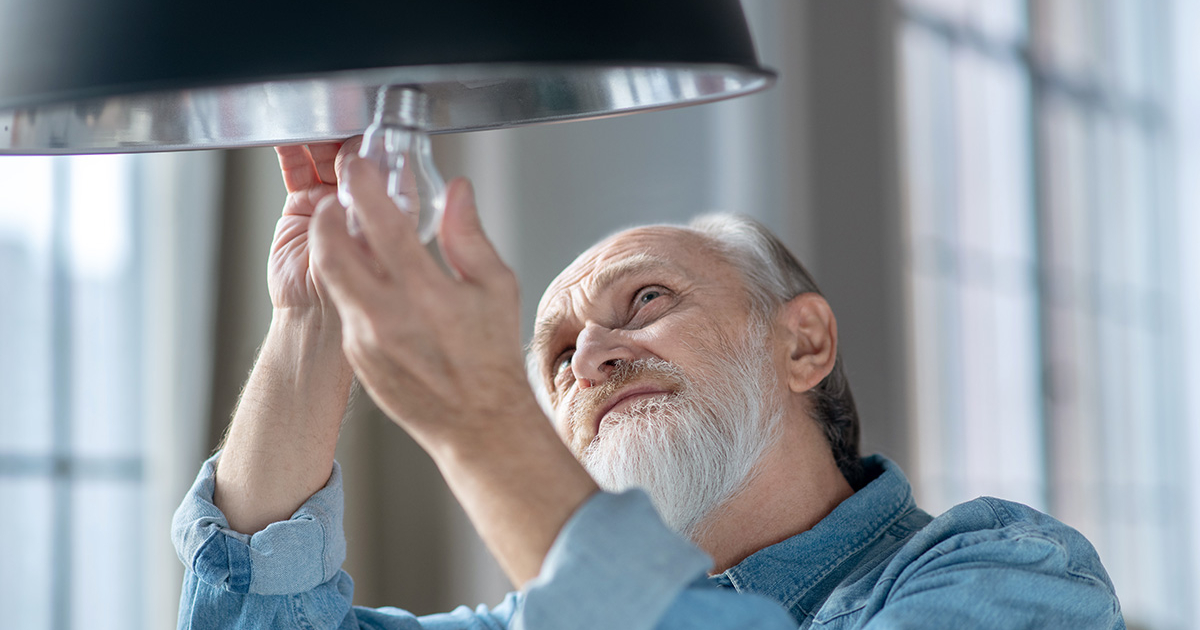
Questions often arise about the best kind of lighting for persons with low vision, and whether one kind of light is better than another. Following is some information on the various types of lighting and some tips on how to use lighting, so that activities for one with low vision are enhanced.
Light Sources
There are several different types of light, each with its own distinct characteristics:
 Sunlight/Natural Light: The best type of light, but it can also cause problems with glare and shadows, both indoors and outdoors.
Incandescent Light: Primarily used in lamps and ceiling fixtures, incandescent light is very concentrated and is the safest light for the eyes; therefore, it is better for “spot” lighting on close work such as reading, sewing and crafts.
It is not recommended for general room lighting because it creates shadows and glare spots, and is not good for color perception or contrast.
Fluorescent Light: Primarily used in ceiling fixtures, fluorescent light is best for overall room lighting because it illuminates a broad area and does not create shadows. However, fluorescent light is not stable, and can flicker and produce a “strobe” effect that is noticeable by people with low vision.
Halogen Light: Halogen light is more concentrated and brighter than regular incandescent light bulbs, and is generally used in task lamps, track lighting, and recessed ceiling fixtures.
Suggestions for Better Lighting
- Aim the light directly on the task at hand.
- Install dimmer switches for controlling the amount of light in the room.
- Install under-cabinet lighting for tasks in the kitchen or work areas.
- Install extra lighting in places where it may be difficult to move around, such as hallways and stairs.
- Install light switches in accessible locations.
- Install switch plates that are lighted or contrast with wall color.
- Place the light directly where needed. Swivel lamps are preferable, as they can be raised or lowered in order to direct the light.
- Watch television in a lighted room. It is easier on the eyes. Be sure, however, that the light isn’t placed where it will cause glare or reflection off of the screen. This can be easily checked with the television screen turned off.
- Install preset light timers in difficult areas.
Glare
Many individuals who have low vision are particularly sensitive to the functional effects of glare and can even experience temporary “blindness” when exposed to glare spots or intense sunlight. Polarized sunglasses will help to reduce glare, especially if the light is reflecting off of a flat surface that is in front of the viewer (e.g., a body of water, snow, or a wet road).
 Glare can be caused by many different factors within the home as well:
- Chrome fixtures, mirrors, and glossy tile in bathrooms
- Uncovered light bulbs in lamps and ceiling fixtures
- Highly polished tile, linoleum, or wooden floors
- Shiny desktops or tabletops
- Television screens and computer monitors
- Windows without curtains or shades
Additional Lighting Considerations
Although additional lighting is usually helpful, simply placing a higher-wattage bulb into an existing light fixture or lamp could cause fires and personal injury, as well as increase glare and shadows.
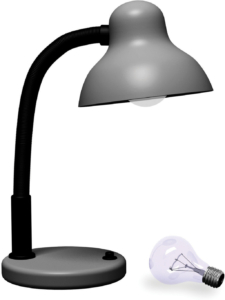 To ensure better light in a work area in which one is reading, cooking, using the telephone, or doing crafts, use a “task lamp” with a flexible arm or gooseneck so light can be focused closely and directly on the work area.
NOTE: Cutting the distance in half between a light source and the task (by bringing the light closer to the work) will make the brightness or intensity of the light approximately four times greater.
To reduce the heat of the bulb, use a lamp with an internal reflector (a double shade). This reduces the heat significantly, and allows you to have the lamp closer to the face than you would with a single shade (especially one made of metal).
If one eye is better and used for reading, position the lamp on that side of the body, slightly to the side. Take caution in placement, however, so that the light is not reflecting from the page into the eyes of the reader. To check this, turn the light off, place a mirror on the page being read, and see if the lamp appears in the mirror. If it does, re-position it. It should still be close to the page, and to the side of the face, but now perhaps at a slightly greater angle. (Of course, too much of an angle will also reduce the brightness on the page, so finding the optimal position is the key to optimal lighting.)
Also adjust the light so there are no shadows on the page.