• Link to Facebook
  • Link to LinkedIn
  • Link to Pinterest
  • HCO# 304700005
Call (949) 859-4700
  • About
    • Our Care Team
    • Testimonials
    • Service Area
  • Services
    • Respite Care
    • Dementia Care
    • Companion Care
    • Chronic Care Management
    • End-of-Life Care
    • Facility Care
    • Special Needs Care
    • 24-Hour Care
    • Personal Care
    • Get Started with Home Care
  • Long-Term Care Insurance
    • Free LTCi Claims Processing
    • Long-Term Care Claim Management
    • Senior Care Costs Compared
    • Understanding the LTCi Claims Process
    • Long-Term Care Forms
    • Long-Term Care Glossary
  • Careers
  • Resources
    • Blog
    • Care Tips
    • Frequently Asked Home Care Questions
    • Glossary of Terms
    • Home Care: A Complete Guide for Families
    • Senior Care Costs Compared
    • Veterans’ Benefits
  • Contact Us
  • Click to open the search input field Click to open the search input field Search
  • Menu Menu
  • (949) 859-4700
  • Contact Us
  • About
    • Our Care Team
    • Testimonials
    • Service Area
  • In-Home Care Services in the Huntington Beach Area
    • Dementia Care
    • Respite Care
    • Frequently Asked Home Care Questions
    • Get Started with Home Care
  • Careers
  • Resources
    • Blog
    • Care Tips
    • Long-Term Care Insurance
      • Long-Term Care Glossary
      • Long-Term Care Forms
    • Veteran’s Benefits
Blog
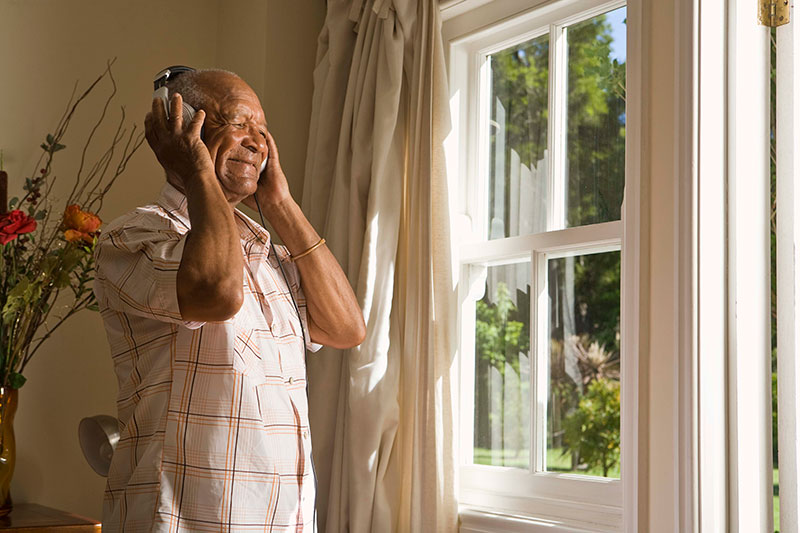
A man finds relief from his Parkinson’s mobility challenges as he listens to music.

Yes, You Really Can Ease Parkinson’s Mobility Challenges With a Song!

November 12, 2025/in Chronic Conditions, Parkinson's Disease /by cwhs-adm

The act of walking seems simple—until Parkinson’s disease makes it complicated. When steps become short, unsteady, or stop unexpectedly, independence can feel out of reach. Yet new research is shining light on a remarkably simple method that helps with Parkinson’s mobility challenges: mental singing. 

Silently singing or humming inside the mind engages the brain in ways that can restore smoother, more coordinated walking patterns. It’s a tool anyone can use anywhere, no special device required.

Why Parkinson’s Disrupts Movement

Parkinson’s disease affects dopamine-producing neurons in the brain, which play a key role in timing and coordination. When these neurons weaken, the signals that control movement slow down. Walking becomes rigid or uneven, and many people experience freezing or difficulty starting motion.

Rehabilitation specialists often rely on rhythmic cues like metronomes or upbeat music to help reestablish timing. But recent studies suggest the rhythm we imagine in our minds can be just as powerful as what we hear externally.

The Science Behind Mental Singing

Researchers at Washington University examined how rhythm affects gait by studying adults over 50—both those with Parkinson’s and those without. Participants walked in three conditions: in silence, while listening to rhythmic music, and while mentally singing a familiar tune.

Their findings were clear:

  • Everyone naturally synced their walking to the rhythm—whether it was real or imagined.
  • Mental singing improved stride consistency and balance more than external music.
  • The best outcomes came when the tempo matched each person’s natural pace.

Dr. Gammon Earhart, who led the research, concluded that using one’s internal rhythm may strengthen the connection between the brain and the body, creating steadier walking patterns.

How It Works

Music—whether heard aloud or imagined—stimulates motor areas of the brain involved in movement coordination. When someone mentally hums a tune, those same circuits activate, helping synchronize the body’s motions.

Because it’s internal, mental singing can be used anywhere: walking to the kitchen, moving through the grocery store, or exercising outdoors. It’s also deeply personal, often tied to pleasant memories that lift mood and reduce stress, adding emotional benefits to the physical improvement.

Trying It at Home

Caregivers and families can help their loved ones experience the benefits of mental singing by following a few simple steps:

  • Start with simple, familiar songs. Older classics, hymns, or lullabies with steady beats work well.
  • Encourage a natural rhythm. Walking too quickly or slowly can make movement less stable.
  • Incorporate it into daily routines. Use it during short walks or transfers around the home.
  • Make it social. Walk together while softly humming or clapping along—it keeps the mood light and motivating.

Bringing Joy Back to Movement

Parkinson’s may change how someone walks, but it doesn’t have to take away their confidence or joy. Simple techniques like mental singing can transform walking from a source of frustration into one of empowerment and connection.

At CareWorks Health Services, we help individuals living with Parkinson’s regain confidence and independence through skilled in-home support and compassionate care.

Call us at (949) 859-4700 to learn more about our Parkinson’s care services in Seal Beach, Huntington Beach, Laguna Woods, and throughout Orange County. Together, we’ll help your loved one find their rhythm again—one steady, musical step at a time.

Tags: mental sining, mobility issues
/wp-content/uploads/2025/11/happy-man-listening-to-headphones-in-front-of-window.jpg 533 800 cwhs-adm /wp-content/uploads/2025/07/CareWorks-Health-Services_icon-logo_color.svg cwhs-adm2025-11-12 05:49:252025-11-05 22:08:07Yes, You Really Can Ease Parkinson’s Mobility Challenges With a Song!

Our Latest Articles

  • How to Recognize and Address Parkinson’s Mood Changes April 15, 2026
  • What Should a Parkinson’s Care Plan Include? A Guide to Planning for the Years Ahead April 1, 2026
  • Meaningful Retirement Activities for Building Identity and Purpose March 16, 2026
  • Why the 40/70 Rule for Aging Parents Can Transform Difficult Family Conversations March 9, 2026
  • Navigating a Hospital Stay With Dementia: A Family Caregiver’s Guide March 2, 2026

Browse by Topic

  • 24-Hour Care
  • Advocacy
  • Aging at Home
  • Aging Issues
  • Alzheimer's and Dementia Care
  • Alzheimer's DIsease
  • Blog
  • California
  • Cancer Care
  • Caregiver Issues
  • Caregiving Conflicts
  • Caregiving Stress
  • Chronic Conditions
  • Common Questions
  • COPD
  • COVID-19
  • Dementia
  • Diabetes
  • Diet and Nutrition
  • Fall Prevention
  • Family Caregivers
  • Family Caregiving
  • Health Concerns
  • Hearing Issues
  • Hospice
  • Live-In Care
  • Medical Breakthroughs
  • Medication
  • Mental Care
  • New to Home Care
  • Nutrition
  • Orange County
  • Pain Management
  • Parkinson's Disease
  • Planning for Care
  • Printable Downloads
  • Rehabilitation
  • Respite Care
  • Senior Birthdays
  • Senior Care
  • Senior Care Advocate
  • Senior Care Tips
  • Senior Exercise
  • Senior Finances
  • Senior Health
  • Senior Independence
  • Senior Mental Health
  • Senior Safety
  • Senior Technology
  • Skin Care
  • Sleep
  • Solo Ager
  • Uncategorized
  • Vision Issues
  • About
  • Our Care Team
  • Testimonials
  • Service Area
  • Huntington Beach
  • Laguna Hills
  • Laguna Woods
  • Mission Viejo
  • Seal Beach
  • Home Care FAQs
  • Blog
  • Get Started with Home Care
  • In-Home Care Services
  • Chronic Care Management
  • Companion Care
  • Dementia Care
  • Personal Care
  • Respite Care
  • Care Tips
  • Long-Term Care Insurance
  • Veterans’ Benefits
  • Careers
  • Contact Us
  • Directory Listings

23046 Avenida De la Carlota
Suite 600
Laguna Hills, CA 92653
(949) 859-4700

18652 Florida Street
Suite 105
Huntington Beach, CA 92648

Search Our Site

  • Facebook
  • Linkedin
  • Pinterest
© 2022 CareWorks Health Services, All Rights Reserved HCO# 304700005 Site by corecubed. Privacy Policy | Terms of Use
Scroll to top Scroll to top Scroll to top