
Staying hydrated is important for everyone but especially for older adults.
Dehydration is one of the most common—and preventable—health concerns among older adults. As we age, our bodies naturally hold less water, our sense of thirst becomes weaker, and certain medications or health conditions can increase fluid loss. Even mild dehydration can lead to fatigue, confusion, dizziness, falls, urinary tract infections (UTIs), and hospitalization.
The good news? A few simple daily habits can dramatically reduce the risk.
Why Is Dehydration So Common in Older Adults?
Here’s something that surprises many families.
By the time someone reaches their 70s or 80s, their body simply doesn’t contain as much water as it did decades earlier. At the same time, the brain’s thirst signals become much less reliable.
That means many seniors don’t actually feel thirsty—even when they’re already dehydrated.
In addition to a reduced sense of thirst, several age-related factors increase the risk of dehydration, including:
- Certain medications, especially diuretics (“water pills”)
- Diabetes, kidney disease, and heart disease
- Memory loss or dementia
- Difficulty swallowing (dysphagia)
- Limited mobility or chronic pain
- Fear of frequent bathroom trips or incontinence
For many older adults, it’s a combination of these factors—not just one—that makes staying hydrated challenging.

How Seniors Lose Fluids
Even when an older adult is drinking fluids regularly, the body loses water throughout the day through normal activities such as:
- Sweating
- Breathing
- Urination
- Bowel movements
Normally, these fluid losses are replaced through drinks and water-rich foods. However, seniors have a smaller fluid reserve than younger adults, so they can become dehydrated much more quickly when fluid losses increase.
Common situations that increase fluid loss include:
- Vomiting or diarrhea
- Fever or infections, including urinary tract infections (UTIs)
- COVID-19, influenza, and other illnesses
- Hot weather or prolonged time outdoors
- Increased physical activity
- Certain medications, such as diuretics, laxatives, and some diabetes medications
Mobility can also play an important role. Some older adults intentionally drink less because getting a glass of water from the kitchen or going to the bathroom has become difficult. Or it’s difficult to wipe and clean themselves. Others may simply forget to drink due to memory loss or cognitive changes.
The good news is that many cases of dehydration are preventable. Recognizing these risk factors early and encouraging regular fluid intake can help older adults stay healthier, maintain their independence, and avoid unnecessary emergency room visits or hospitalizations.
At CareWorks Health Services, caregivers throughout Orange County, including Huntington Beach, Irvine, Newport Beach, and Laguna Woods, help seniors maintain healthy hydration habits through meal preparation, medication reminders, and home care services.
Common Signs and Symptoms of Dehydration in Older Adults
One would assume that dehydration starts with intense thirst. In fact, many seniors never feel thirsty at all.
Instead, you need to watch for these warning signs.
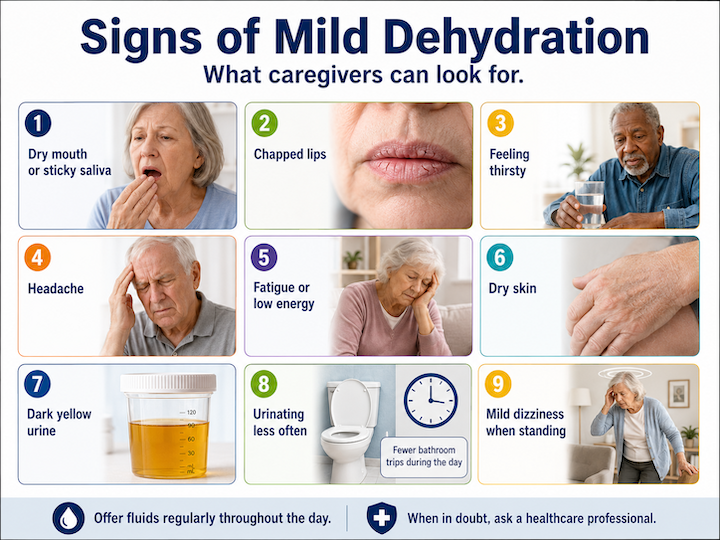
Early (Mild) Symptoms
- Dry mouth or sticky saliva
- Chapped, peelips
- Feeling thirsty (when thirst is present)
- Headache
- Fatigue or low energy
- Dry skin
- Dark yellow urine
- Urinating less often
- Mild dizziness when standing
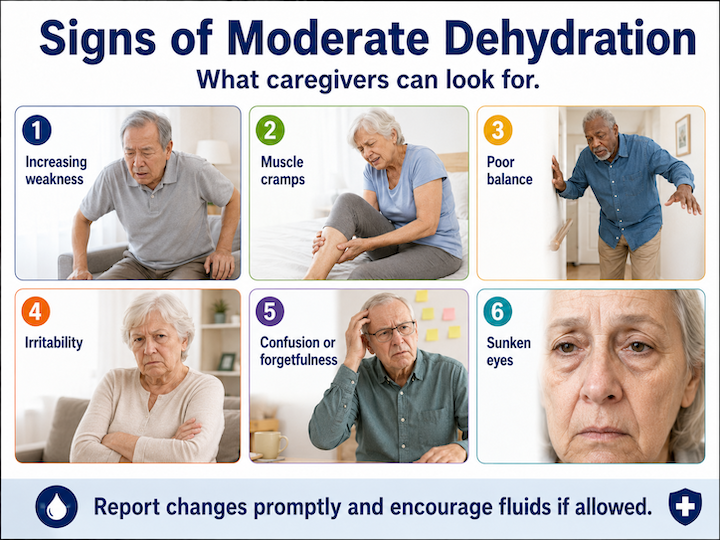
Moderate Symptoms
As dehydration worsens, symptoms become more noticeable.
These include:
- Increasing weakness
- Muscle cramps
- Poor balance
- Irritability
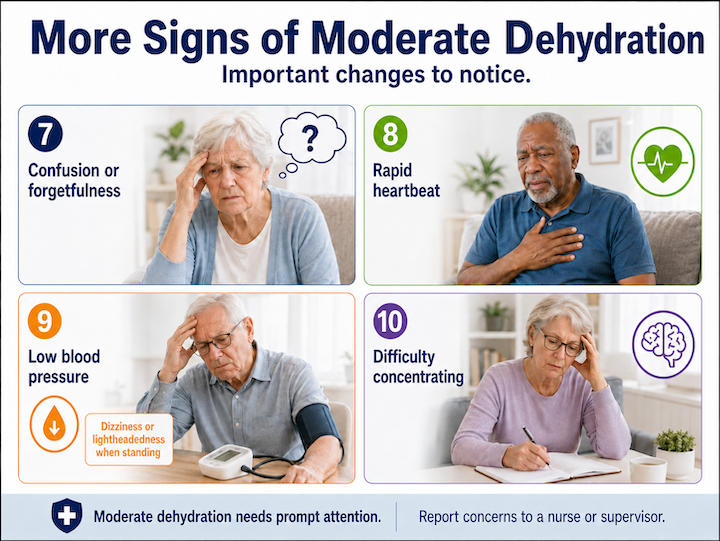
- Confusion or forgetfulness
- Sunken eyes
- Rapid heartbeat
- Low blood pressure
- Difficulty concentrating
Many families first notice that their loved one “just isn’t acting like themselves.”
Severe Symptoms
Severe dehydration is a medical emergency.
Symptoms include:
- Severe Warning Sign
- Extreme confusion
- Fainting
- Rapid breathing
- Very little or no urine
- Cold, clammy skin
- Rapid pulse
- Inability to stay awake
- Seizures or unconsciousness
- Why It Matters
- Brain isn’t receiving enough fluids
- Blood pressure drops dangerously low
- Body struggling to compensate
- Kidneys may be shutting down
- Poor circulation
- Heart working harder
- Serious fluid loss
- Emergency care required
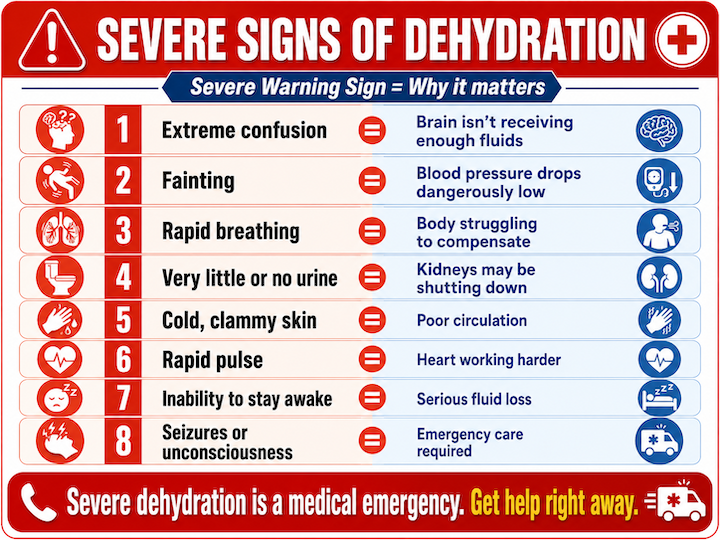
If any of these occur, call 911 or seek emergency medical care immediately.
One important thing to remember is that dehydration often develops gradually. Paying attention to subtle changes—such as unusual fatigue, confusion, or darker urine—can help prevent a small problem from becoming a medical emergency.
Why Many Seniors Don’t Want to Drink Water
One question families ask all the time is:
“Why won’t my dad drink water?”
Usually, there isn’t just one reason. It’s often several small issues combined.
1. They Simply Aren’t Thirsty
Aging changes the body’s thirst response. Many older adults genuinely don’t feel thirsty until dehydration has already begun.
2. They’re Worried About Bathroom Trips
This is probably one of the biggest reasons.
Many seniors intentionally drink less because they:
- Have incontinence
- Need assistance using the bathroom
- Have mobility or dressing issues
- Wake up frequently at night
It becomes a tradeoff:
Less water means fewer bathroom trips—but unfortunately, much higher health risks.
3. They Forget
Memory loss and dementia can make hydration challenging. Someone may honestly believe they just drank water five minutes ago. This is why gentle reminders throughout the day can make such a difference.
4. Water Doesn’t Taste Good
Fortunately, hydration doesn’t have to come only from plain water.
How to Prevent Dehydration- Easy Ways to Help Seniors Drink More Water
The good news is that preventing dehydration doesn’t have to be complicated. Small changes often work better than constantly reminding someone to “drink more water.”
Here are some practical tips that families and caregivers use every day.
Offer Small Amounts More Often
A large 16-ounce glass of water can feel overwhelming. Instead, offer half a glass every hour or two. Most seniors find this much easier to manage.
Add Natural Flavor
Let’s be honest—not everyone enjoys plain water.
If your loved one says water tastes “boring,” try adding:
- Lemon or lime slices
- Fresh strawberries
- Cucumber
- Mint leaves
- Orange slices
- Frozen berries
These add flavor without loading drinks with sugar.
Build Drinking Into Daily Routines
One of the easiest ways to improve hydration is to make drinking fluids part of an existing habit.
For example:
- A glass of water when waking up
- Water with every meal
- Tea after lunch
- A small drink after taking medications (unless otherwise instructed)
- Water while watching the evening news
Routine removes the need to remember.
Use Cups They Like
It sounds simple, but it matters. Some older adults avoid drinking because heavy cups are difficult to hold or because they spill easily.
Try:
- Lightweight insulated cups
- Easy-grip water bottles
- Cups with lids and straws (if safe for the individual)
- Clear containers that show how much has been consumed
Comfort can make a surprising difference.

Spill-Resistant Sippy Cups for Elderly
Watch for illness and hot weather
Some days increase the risk of dehydration. Pay extra attention when an older adult:
- Has a fever
- Has vomiting or diarrhea
- Spends time outdoors in hot weather
- Exercises more than usual
- Starts a new medication such as a diuretic (“water pill”)
On these days, encourage fluids more frequently and monitor for early symptoms.
Best Drinks and Foods for Hydration
Besides drinking water, there are foods high water content that help keep your senior hydrated.
Some excellent choices include:
Best Choices |
Approximate Water Content |
| Water | 100% |
| Milk | High |
| Herbal tea | High |
| Watermelon | 92% |
| Cucumbers | 96% |
| Strawberries | 91% |
| Oranges | 86% |
| Cantaloupe | 90% |
| Tomatoes | 95% |
| Celery | 95% |
| Soups and broths | High |
If your loved one has kidney disease, heart failure, or another condition requiring fluid restrictions, follow their healthcare provider’s recommendations.
Fruit ice pops are an easy, refreshing way to add fluids—especially for clients who do not enjoy drinking plain water.
Simple Fruit Ice Pop Recipe
Ingredients
- 2 cups seedless watermelon, strawberries, peaches, berries, or another soft fruit
- ½ cup water or 100% fruit juice
- Optional: ½ cup plain or vanilla yogurt for extra protein and calcium
Directions
- Blend the fruit and liquid until smooth.
- Pour the mixture into ice-pop molds or small paper cups.
- Add sticks and freeze for at least 4 hours.
- Offer one as a snack on warm days or between meals.
Caregiver reminder: Follow the client’s care plan. Do not offer frozen treats to someone with swallowing problems unless the texture has been approved by a nurse, speech-language pathologist, or other healthcare professional. Fruit pops add fluid, but they should not replace regular drinks throughout the day.
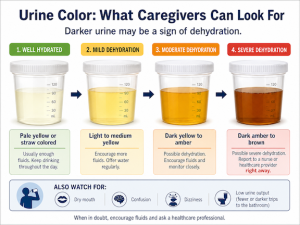
How Caregivers Can Help Prevent Dehydration
For caregivers providing care at home, you can do little things like:
1.Check Urine Color
Generally:
- Pale yellow: Well hydrated
- Dark yellow or amber: Time to drink more fluids
- Very dark urine or no urine: Contact a healthcare provider
Keep in mind that some medications and vitamin supplements can change urine color, so always consider the bigger picture.
2. Review Medications
Some medications—including diuretics, laxatives, and certain diabetes medications—can increase fluid loss.
3. Keep a Simple Fluid Log
If dehydration is an ongoing concern, tracking daily fluid intake can help. It doesn’t have to be complicated.
A small notebook, checklist, or smartphone app can record:
- Glasses of water
- Tea or coffee
- Milk
- Soup
- Juice
- Water-rich foods
Patterns become much easier to spot over time.
4. Offer Gentle Reminders
Rather than asking, “Are you thirsty?” try building hydration into everyday routines.
For example:
- A glass of water after waking up
- Fluids with every meal
- Tea during the afternoon
- Water after medications (unless instructed otherwise)
Routine often works better than relying on thirst alone.
Frequently Asked Questions
How much water should an elderly person drink each day?
There isn’t one number that fits everyone. Many older adults benefit from about 6 to 8 cups (1.5–2 liters) of fluids daily, but individual needs vary based on activity level, medications, weather, and medical conditions. Always follow advice from a healthcare provider if fluid restrictions apply.
Can dehydration cause confusion in seniors?
Yes. Dehydration can reduce blood flow to the brain, leading to confusion, dizziness, irritability, and difficulty concentrating. In some cases, severe dehydration can cause delirium and requires immediate medical attention.
Is coffee or tea dehydrating?
Moderate amounts of coffee and tea generally contribute to daily fluid intake. While caffeine has a mild diuretic effect, these beverages can still help with hydration for most people.
What’s the fastest way to treat mild dehydration?
Offer small, frequent sips of water or an oral rehydration solution if recommended by a healthcare provider. Rest in a cool environment and monitor symptoms. If symptoms worsen or don’t improve, seek medical care.
What color should urine be?
A pale yellow color usually indicates good hydration. Dark yellow or amber-colored urine can be a sign that it’s time to drink more fluids. (see unage above)
And if you’re concerned that an aging parent isn’t drinking enough water, CareWorks Health Services homemaking services can help. Our home helpers can provide a few hours of care, live in care, and 24 hour in home care. They will provide reminders to drink water, cook meals, be a care companion, in addition to personal care, which helps older adults remain safe and independent in cities throughout Orange County, CA. Call us today to learn more about our home care services.